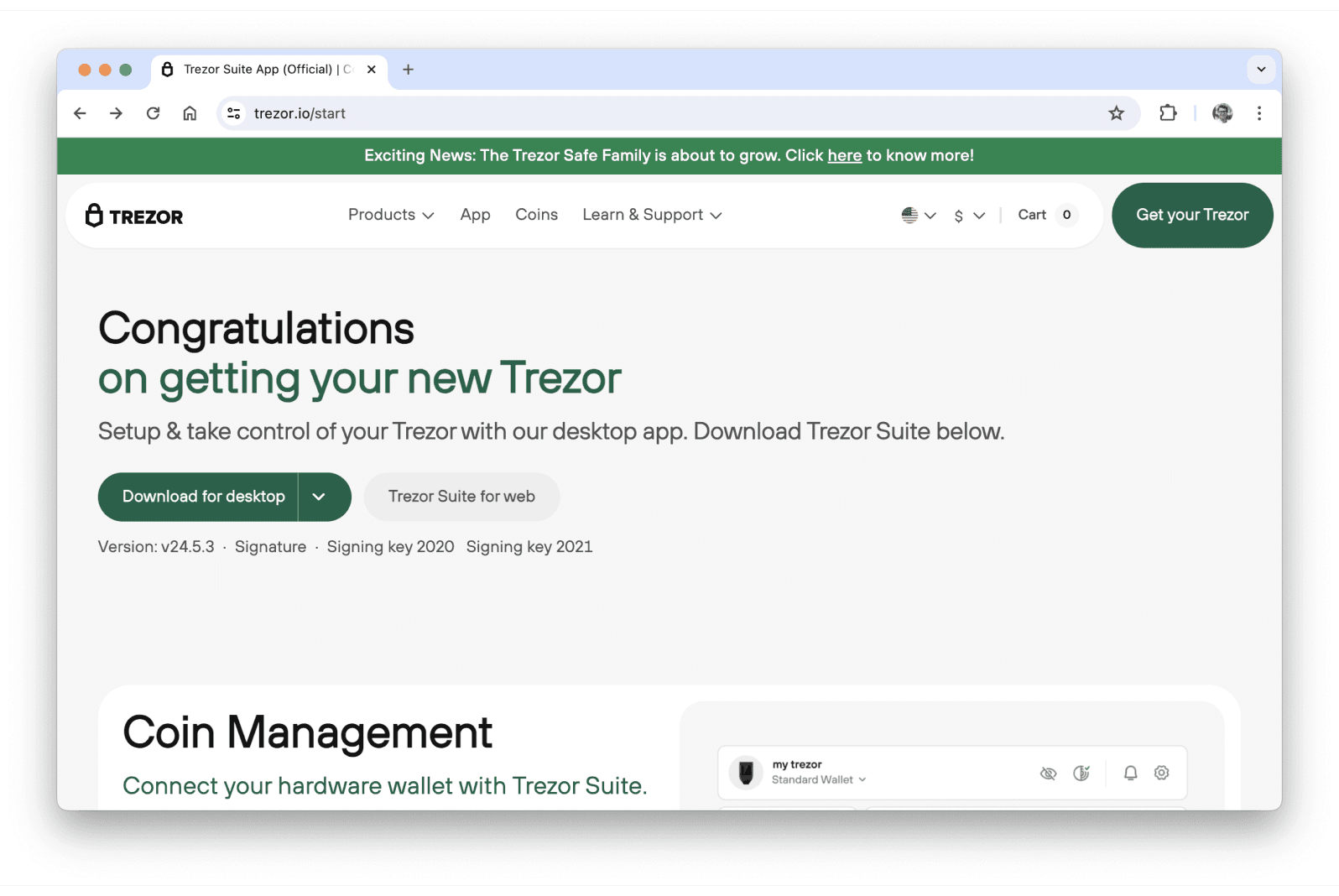
Trezor.io/start: A Complete Guide From First Setup to Long-Term Crypto Security
Owning cryptocurrency is not just about buying digital assets—it is about protecting them. In a decentralized financial system, the user is fully responsible for security. There are no password resets, no fraud departments, and no recovery hotlines. This is why hardware wallets exist. Among them, Trezor stands out as one of the most trusted solutions. The journey with a Trezor wallet always begins at one place: Trezor.io/start.
Trezor.io/start is more than a setup page. It is a security checkpoint, an education tool, and a foundation for responsible crypto ownership. This guide explains Trezor.io/start in a completely new way, covering not just how to use it, but why each step matters and how it fits into the long-term protection of your digital assets.
What Is Trezor.io/start?
Trezor.io/start is the official onboarding portal created by Trezor (SatoshiLabs) for initializing a Trezor hardware wallet. It ensures that users complete the setup process using authentic software, verified firmware, and secure instructions.
The page acts as a controlled entry point that prevents users from:
Downloading fake wallet software
Installing malicious firmware
Generating recovery phrases online
Falling victim to phishing attacks
By centralizing setup at Trezor.io/start, Trezor reduces the most common risks faced by new hardware wallet users.
Why the Setup Phase Is the Most Critical Moment
The setup phase determines who controls your crypto forever. During this stage:
Private keys are generated
Recovery phrases are created
Firmware is installed
Security settings are defined
If any of these steps are compromised, funds can be stolen without the user ever realizing how. Trezor.io/start exists specifically to protect users during this vulnerable moment.
The Philosophy Behind Trezor.io/start
Unlike custodial platforms, Trezor does not preconfigure wallets or hold backup data. Every user must initialize their own device. This philosophy ensures:
No one else ever sees your keys
No central authority can access funds
Ownership is absolute
Trezor.io/start enforces this philosophy by guiding users through a process that prioritizes independence over convenience.
Trezor Hardware Wallets Explained Simply
A Trezor hardware wallet is a physical device that stores your private keys offline. It does not hold cryptocurrency itself—crypto always lives on the blockchain. What the device protects is the ability to authorize transactions.
Key Characteristics
Keys never leave the device
Transactions are signed internally
Physical button or touchscreen approval is required
Malware on a computer cannot steal keys
This design makes Trezor wallets resistant to online attacks.
Which Devices Use Trezor.io/start?
Trezor.io/start supports all official Trezor hardware wallets.
Supported Models
Trezor Model One – Entry-level, simple, proven
Trezor Model T – Advanced model with touchscreen
While the interface differs slightly, the setup logic and security model remain consistent.
What Is Trezor Suite and Why It’s Required
Trezor Suite is the official desktop application used to manage a Trezor wallet. Trezor.io/start directs users to install it as part of the setup process.
What Trezor Suite Does
Displays wallet balances
Sends and receives cryptocurrency
Manages multiple accounts
Controls privacy and security settings
Installs firmware updates
Trezor Suite is the dashboard; the hardware wallet is the vault.
Step-by-Step Journey Through Trezor.io/start
Step 1: Open Trezor.io/start Manually
Always type the URL yourself. Avoid ads, bookmarks, or third-party links.
Step 2: Choose Your Device Model
Selecting the correct model ensures accurate instructions.
Step 3: Download Trezor Suite
Install the official app for Windows, macOS, or Linux.
Step 4: Connect the Trezor Device
Use the included USB cable and connect directly to your computer.
Step 5: Install Firmware
Firmware activates the device and verifies its authenticity.
Step 6: Create a New Wallet or Recover One
Choose whether you are starting fresh or restoring an existing wallet.
Step 7: Write Down the Recovery Phrase
This step is the most important and must be done offline.
Why Trezor Devices Ship Without Firmware
New Trezor devices are intentionally shipped without active firmware. This prevents tampering during shipping or storage.
Firmware Installation Ensures
The device is genuine
No malicious code exists
Latest security protections are active
Firmware should only be installed through Trezor Suite accessed from Trezor.io/start.
The Recovery Phrase: Your Ultimate Backup
The recovery phrase is a list of words generated by the device during setup. It is the master key to your wallet.
What the Recovery Phrase Can Do
Restore funds if the device is lost
Rebuild the wallet on a new device
Provide lifetime access to assets
What the Recovery Phrase Must Never Do
Be stored digitally
Be shared with anyone
Be entered on a website
Be photographed or scanned
Trezor.io/start ensures this phrase is generated securely and offline.
How Trezor.io/start Prevents Phishing Attacks
Phishing is the most common cause of crypto theft. Trezor’s setup process is designed to eliminate this threat.
Built-In Anti-Phishing Design
No login accounts
No email registration
No password systems
No online recovery phrase entry
Any site or app that asks for your recovery phrase is fraudulent.
Assets You Can Manage After Setup
Once setup is complete, Trezor supports thousands of cryptocurrencies.
Examples
Bitcoin (BTC)
Ethereum (ETH)
Litecoin (LTC)
Cardano (ADA)
Solana (SOL)
Polkadot (DOT)
ERC-20 and other tokens
Support depends on device model and firmware version.
Trezor.io/start vs Custodial Wallet Onboarding
FeatureTrezor.io/startCustodial WalletKey OwnershipUserPlatformOnline ExposureMinimalHighRecovery ControlUser-onlyProvider-basedAccount FreezingImpossiblePossible
Trezor.io/start enables true ownership from day one.
Common Beginner Mistakes and How to Avoid Them
Mistake: Trusting Search Ads
Solution: Type Trezor.io/start manually.
Mistake: Skipping Recovery Backup
Solution: Write the phrase down carefully and verify it.
Mistake: Digital Storage of Recovery Phrase
Solution: Use paper or metal backups only.
Mistake: Ignoring Firmware Updates
Solution: Update regularly via Trezor Suite.
What Happens If the Device Is Lost or Destroyed
The device itself is replaceable. The recovery phrase is not.
Recovery Steps
Buy a new Trezor device
Install Trezor Suite
Select “Recover wallet”
Enter the recovery phrase offline
Funds are restored exactly as before.
Privacy Advantages of Starting at Trezor.io/start
Trezor does not require:
Names
Emails
Phone numbers
Identity documents
This privacy-first approach supports financial sovereignty.
Life After Setup: How Users Typically Use Trezor
After setup, users commonly:
Store long-term holdings securely
Make occasional verified transactions
Interact with DeFi platforms
Connect to third-party wallet apps
Sign transactions offline
The device becomes part of a long-term security strategy.
Best Practices for Long-Term Trezor Security
Use a Strong PIN
Avoid predictable patterns.
Update Firmware Regularly
Security evolves—so should your device.
Secure the Recovery Phrase
Consider fireproof or metal backups.
Disconnect When Idle
Reduce physical exposure to risk.
Why Trezor.io/start Is the Foundation of Self-Custody
Self-custody begins with trust in the setup process. Trezor.io/start ensures that trust is earned through transparency, offline security, and user control. It establishes a clean, verifiable starting point that protects users not just today, but years into the future.
Conclusion
Trezor.io/start is not just where you begin—it defines how securely you will own cryptocurrency for the rest of your journey. By guiding users through verified firmware installation, offline key generation, and proper recovery phrase handling, it eliminates the most dangerous risks in crypto ownership.
Trezor.io/start: A Complete Guide From First Setup to Long-Term Crypto Security
Owning cryptocurrency is not just about buying digital assets—it is about protecting them. In a decentralized financial system, the user is fully responsible for security. There are no password resets, no fraud departments, and no recovery hotlines. This is why hardware wallets exist. Among them, Trezor stands out as one of the most trusted solutions. The journey with a Trezor wallet always begins at one place: Trezor.io/start.
Trezor.io/start is more than a setup page. It is a security checkpoint, an education tool, and a foundation for responsible crypto ownership. This guide explains Trezor.io/start in a completely new way, covering not just how to use it, but why each step matters and how it fits into the long-term protection of your digital assets.
What Is Trezor.io/start?
Trezor.io/start is the official onboarding portal created by Trezor (SatoshiLabs) for initializing a Trezor hardware wallet. It ensures that users complete the setup process using authentic software, verified firmware, and secure instructions.
The page acts as a controlled entry point that prevents users from:
Downloading fake wallet software
Installing malicious firmware
Generating recovery phrases online
Falling victim to phishing attacks
By centralizing setup at Trezor.io/start, Trezor reduces the most common risks faced by new hardware wallet users.
Why the Setup Phase Is the Most Critical Moment
The setup phase determines who controls your crypto forever. During this stage:
Private keys are generated
Recovery phrases are created
Firmware is installed
Security settings are defined
If any of these steps are compromised, funds can be stolen without the user ever realizing how. Trezor.io/start exists specifically to protect users during this vulnerable moment.
The Philosophy Behind Trezor.io/start
Unlike custodial platforms, Trezor does not preconfigure wallets or hold backup data. Every user must initialize their own device. This philosophy ensures:
No one else ever sees your keys
No central authority can access funds
Ownership is absolute
Trezor.io/start enforces this philosophy by guiding users through a process that prioritizes independence over convenience.
Trezor Hardware Wallets Explained Simply
A Trezor hardware wallet is a physical device that stores your private keys offline. It does not hold cryptocurrency itself—crypto always lives on the blockchain. What the device protects is the ability to authorize transactions.
Key Characteristics
Keys never leave the device
Transactions are signed internally
Physical button or touchscreen approval is required
Malware on a computer cannot steal keys
This design makes Trezor wallets resistant to online attacks.
Which Devices Use Trezor.io/start?
Trezor.io/start supports all official Trezor hardware wallets.
Supported Models
Trezor Model One – Entry-level, simple, proven
Trezor Model T – Advanced model with touchscreen
While the interface differs slightly, the setup logic and security model remain consistent.
What Is Trezor Suite and Why It’s Required
Trezor Suite is the official desktop application used to manage a Trezor wallet. Trezor.io/start directs users to install it as part of the setup process.
What Trezor Suite Does
Displays wallet balances
Sends and receives cryptocurrency
Manages multiple accounts
Controls privacy and security settings
Installs firmware updates
Trezor Suite is the dashboard; the hardware wallet is the vault.
Step-by-Step Journey Through Trezor.io/start
Step 1: Open Trezor.io/start Manually
Always type the URL yourself. Avoid ads, bookmarks, or third-party links.
Step 2: Choose Your Device Model
Selecting the correct model ensures accurate instructions.
Step 3: Download Trezor Suite
Install the official app for Windows, macOS, or Linux.
Step 4: Connect the Trezor Device
Use the included USB cable and connect directly to your computer.
Step 5: Install Firmware
Firmware activates the device and verifies its authenticity.
Step 6: Create a New Wallet or Recover One
Choose whether you are starting fresh or restoring an existing wallet.
Step 7: Write Down the Recovery Phrase
This step is the most important and must be done offline.
Why Trezor Devices Ship Without Firmware
New Trezor devices are intentionally shipped without active firmware. This prevents tampering during shipping or storage.
Firmware Installation Ensures
The device is genuine
No malicious code exists
Latest security protections are active
Firmware should only be installed through Trezor Suite accessed from Trezor.io/start.
The Recovery Phrase: Your Ultimate Backup
The recovery phrase is a list of words generated by the device during setup. It is the master key to your wallet.
What the Recovery Phrase Can Do
Restore funds if the device is lost
Rebuild the wallet on a new device
Provide lifetime access to assets
What the Recovery Phrase Must Never Do
Be stored digitally
Be shared with anyone
Be entered on a website
Be photographed or scanned
Trezor.io/start ensures this phrase is generated securely and offline.
How Trezor.io/start Prevents Phishing Attacks
Phishing is the most common cause of crypto theft. Trezor’s setup process is designed to eliminate this threat.
Built-In Anti-Phishing Design
No login accounts
No email registration
No password systems
No online recovery phrase entry
Any site or app that asks for your recovery phrase is fraudulent.
Assets You Can Manage After Setup
Once setup is complete, Trezor supports thousands of cryptocurrencies.
Examples
Bitcoin (BTC)
Ethereum (ETH)
Litecoin (LTC)
Cardano (ADA)
Solana (SOL)
Polkadot (DOT)
ERC-20 and other tokens
Support depends on device model and firmware version.
Trezor.io/start vs Custodial Wallet Onboarding
FeatureTrezor.io/startCustodial WalletKey OwnershipUserPlatformOnline ExposureMinimalHighRecovery ControlUser-onlyProvider-basedAccount FreezingImpossiblePossible
Trezor.io/start enables true ownership from day one.
Common Beginner Mistakes and How to Avoid Them
Mistake: Trusting Search Ads
Solution: Type Trezor.io/start manually.
Mistake: Skipping Recovery Backup
Solution: Write the phrase down carefully and verify it.
Mistake: Digital Storage of Recovery Phrase
Solution: Use paper or metal backups only.
Mistake: Ignoring Firmware Updates
Solution: Update regularly via Trezor Suite.
What Happens If the Device Is Lost or Destroyed
The device itself is replaceable. The recovery phrase is not.
Recovery Steps
Buy a new Trezor device
Install Trezor Suite
Select “Recover wallet”
Enter the recovery phrase offline
Funds are restored exactly as before.
Privacy Advantages of Starting at Trezor.io/start
Trezor does not require:
Names
Emails
Phone numbers
Identity documents
This privacy-first approach supports financial sovereignty.
Life After Setup: How Users Typically Use Trezor
After setup, users commonly:
Store long-term holdings securely
Make occasional verified transactions
Interact with DeFi platforms
Connect to third-party wallet apps
Sign transactions offline
The device becomes part of a long-term security strategy.
Best Practices for Long-Term Trezor Security
Use a Strong PIN
Avoid predictable patterns.
Update Firmware Regularly
Security evolves—so should your device.
Secure the Recovery Phrase
Consider fireproof or metal backups.
Disconnect When Idle
Reduce physical exposure to risk.
Why Trezor.io/start Is the Foundation of Self-Custody
Self-custody begins with trust in the setup process. Trezor.io/start ensures that trust is earned through transparency, offline security, and user control. It establishes a clean, verifiable starting point that protects users not just today, but years into the future.
Conclusion
Trezor.io/start is not just where you begin—it defines how securely you will own cryptocurrency for the rest of your journey. By guiding users through verified firmware installation, offline key generation, and proper recovery phrase handling, it eliminates the most dangerous risks in crypto ownership.